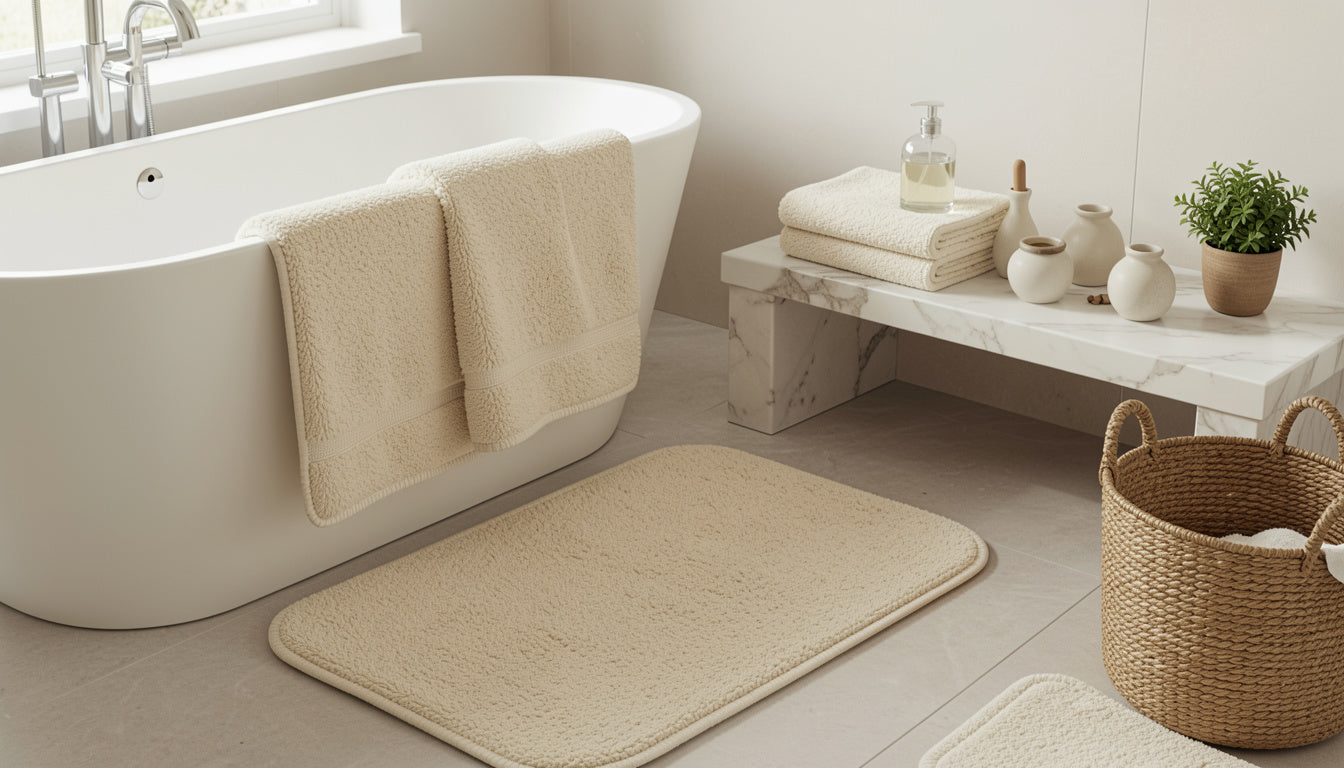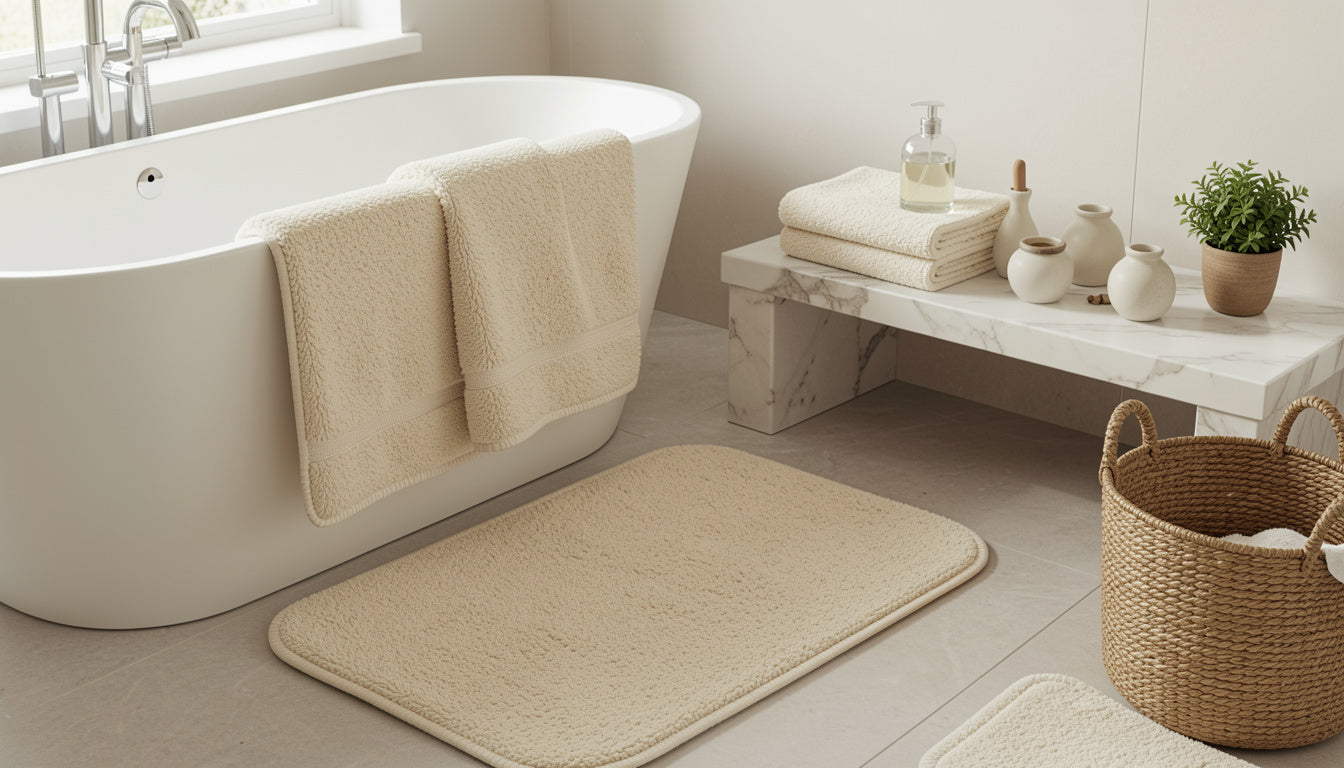
How to Wash a Carpet Mat? A Guide to Proper Use and Care
How to Wash a Rug Mat? A Guide to Proper Use and Care
Among the products that may seem small in home decor but directly affect comfort of use are rug mats. Used in areas such as bathrooms, entryways, bedrooms, kitchens, or in front of sinks, mats not only complement the floor but also create a warmer, tidier, and more stylish look in the home.
However, for mats to last longer, they need to be used and cleaned correctly. Incorrect washing, high temperatures, strong detergents, or improper drying can adversely affect the mat's texture, color, and non-slip backing over time.
So, how do you wash a rug mat, can a bath mat be machine washed, how do you care for non-slip mats, and what should be considered to maintain the mats' shape?
What is a Rug Mat?
A rug mat is a home textile product used on the floor, providing decorative, protective, and comfort benefits. It can have different textures, sizes, backing structures, and purposes depending on the area it is used in.
Rug mats are generally preferred in the following areas:
- In front of the bathroom
- In front of the sink
- Entryway
- Kitchen
- Bedroom
- Dressing room
- Laundry room
- In front of the balcony door
A well-chosen mat makes the area both more functional and more aesthetic.
What to Consider When Choosing a Mat?
When choosing a mat, not only color and pattern but also the area of use should be considered. A mat chosen for the bathroom does not necessarily have to have the same features as a mat chosen for an entryway or bedroom.
When choosing a mat, the following details can be considered:
- Area of use
- Size
- Non-slip backing feature
- Water absorbency
- Softness
- Ease of cleaning
- Color and decoration harmony
- Washing instructions
- Drying speed
Especially for mats used in wet areas like bathrooms and in front of sinks, non-slip backing and quick-drying features become more important.
Can Rug Mats Be Machine Washed?
Many rug mats can be machine washed; however, the most important rule here is to follow the washing instructions on the product label. Each mat may have a different fabric structure, base material, and weaving feature.
Generally, for machine washable mats, the following points should be noted:
- Low temperature should be preferred
- Delicate cycle should be used
- Intense spinning should be avoided
- Bleach should not be used
- Too much detergent should not be added
- High heat should be avoided for non-slip products
- If a dryer is used, the product label should be checked
To maintain the mat's shape for a long time, washing should be done gently.
At What Temperature Should a Rug Mat Be Washed?
The temperature for washing mats is very important. Too high a temperature can damage the product's texture, fade its color, or harm the non-slip backing structure.
For general use, a 30-degree delicate wash is a safer choice for many mats. However, for precise information, the care label of the product should always be checked.
The following principle can be applied during washing:
| Mat Type | Recommended Approach |
|---|---|
| Non-slip mat | Low temperature, delicate cycle |
| Bath mat | 30 degrees, good rinse |
| Cotton mat | Low/medium temperature according to label |
| Decorative rug mat | Delicate wash, low spin |
| Thick pile mat | Wash without overfilling machine |
While washing at high temperatures may seem to clean the mat better, in the long run, it can shorten the product's lifespan.
How to Wash a Non-Slip Mat?
For non-slip mats, the most important consideration is to preserve the backing structure. The non-slip backing can wear out over time due to high heat, harsh chemicals, and intense spinning.
Points to consider when washing a non-slip mat:
- Do not wash the product inside out; do not squeeze it in a way that could damage the backing.
- Wash at a low temperature.
- Choose a delicate cycle.
- Do not wring excessively.
- Do not use bleach.
- Do not use strong fabric softener.
- Do not dry directly with high heat.
- Place on the floor after it is completely dry.
To ensure the non-slip backing functions for a long time, the mat should not be left damp and should not be exposed to high heat.
How to Wash a Bath Mat?
Bath mats require regular care because they are used in humid environments. If a mat remains damp on the floor for a long time after bathing, it can lead to bad odors, hygiene problems, and loss of shape.
The following steps can be followed when washing a bath mat:
- Shake off dust and lint from the mat.
- Check the product label.
- Wash with similar colors.
- Choose a 30-degree delicate cycle.
- Use a small amount of detergent.
- Do not use bleach or harsh chemicals.
- Spin at a low speed.
- Dry completely in a well-ventilated area.
After washing a bath mat, it should not be laid on the floor until it is completely dry. A damp mat can both create a bad odor and leave marks on the floor.
Should Fabric Softener Be Used When Washing Mats?
Caution should be exercised when using fabric softener when washing mats. Especially for non-slip mats, too much fabric softener can negatively affect the backing structure and the product's grip on the floor.
Additionally, strong fabric softener can leave residue on the fabric. This can cause the mat to become heavier, change its texture, or reduce its absorbency over time.
Therefore, when washing mats:
- Use very little or no fabric softener.
- Add detergent in moderation.
- Rinse thoroughly.
- Dry the product completely.
The most important aspect of mat care is not to overdo it with detergent and fabric softener.
How Should Mats Be Dried?
For mats to last longer, the drying stage is as important as washing. Improper drying can damage the mat's backing, texture, and shape.
Points to consider when drying mats:
- Do not expose the mat directly to high heat.
- Do not dry on a radiator.
- Do not leave it under direct intense sunlight for too long.
- Spread it out to dry in a well-ventilated area.
- Do not put it in the closet before it is completely dry.
- Do not lay it on the floor before it is completely dry.
For non-slip mats, high heat can cause the backing to crack or lose its flexibility. Therefore, natural and balanced drying is safer.
How Often Should Mats Be Washed?
The frequency of washing mats varies depending on their area of use. Mats used in damp areas like bathrooms and in front of sinks should be washed more frequently. In heavily used areas like entryways and in front of doors, dust and dirt accumulation can be faster.
General recommendations can be considered as follows:
| Area of Use | Washing Frequency |
|---|---|
| Bath mat | Once every 1–2 weeks |
| Sink mat | Once every 1–2 weeks |
| Entryway mat | Once every 1–3 weeks, depending on use |
| Bedroom mat | Once every 3–4 weeks |
| Guest bathroom mat | Depending on usage intensity |
These periods may vary depending on the number of people in the household, usage intensity, and environmental humidity.
How to Prevent Mats from Smelling Bad?
The most common cause of bad odors in mats is moisture. Wet or damp mats can develop a bad smell over time. Especially mats used in the bathroom should be aired regularly.
To prevent bad odors:
- Air the mat after bathing.
- Do not stack wet mats.
- Do not put them in the closet before they are completely dry.
- Wash them at regular intervals.
- Ensure the floor also stays dry.
- Dry them immediately after they come out of the machine.
It is also important for the area where the mat is located to be ventilated. Mats in constantly closed bathrooms and laundry rooms can start to smell faster.
What to Consider When Using Mats?
Proper use of mats is important for both safety and product lifespan.
Appropriate Use for the Floor
Non-slip mats generally perform better on flat and dry surfaces. On very wet or soapy surfaces, the risk of slipping may increase. Therefore, the underside of the mat and the floor should be cleaned regularly.
Do Not Leave Damp
If the mat gets wet after bathing, it should be aired if possible. A constantly damp mat can wear out faster.
Use Under Heavy Furniture
If mats remain compressed under heavy furniture for a long time, they may lose their shape. If intended for decorative purposes, placement should be appropriate for the product's structure.
Color Harmony
When choosing a mat, ensuring color harmony with bathroom cabinets, towels, bathrobes, shower curtains, and floor color creates a more stylish look.
How to Use Mats in Bathroom Decoration?
Mats are a small but effective complementary element in bathroom decoration. With the right choice of color and texture, the bathroom can appear warmer, tidier, and more stylish.
The following suggestions can be considered when using bath mats:
- Choose a mat that matches the color of your towels and bathrobes.
- In small bathrooms, opt for light colors.
- In large bathrooms, you can use bath mats as a set.
- You can choose different sizes for in front of the sink and outside the shower.
- You can complete the look with bathroom scents and decorative soaps.
Thus, the bathroom transforms into not only a functional but also a more elegant living space.
[Room Scent / Decorative Soap category]
Using Doormats in the Entrance and Kitchen
Rug mats are not only used in the bathroom. They also play both a decorative and practical role in areas like entrances and kitchens.
Doormats for the Entrance
The mat used in the entrance sets the first impression upon entering the home. Here, more durable, easy-to-clean, and stable models should be preferred.
Doormats for the Kitchen
Mats used in front of the sink or countertop in the kitchen provide both comfort and decorative integrity. However, it is important that kitchen mats are easy to clean.
Care Tips to Maintain the Shape of Your Mats
To keep your mat looking new for a long time, the following care habits are important:
- Shake it regularly.
- Clean lightly with a vacuum cleaner.
- Address stains promptly.
- Wash according to the product label.
- Do not use very high temperatures.
- Avoid high heat during drying.
- Do not store damp.
- Store unused mats in a dry and airy place.
Proper care helps preserve the mat's texture, color, and non-slip backing.
Biggest Mistakes Made When Washing Mats
Washing in Very Hot Water
High temperatures can damage the mat's texture and backing structure. Especially for non-slip backed products, low temperatures are safer.
Using Too Much Detergent
If too much detergent is not rinsed well, it can leave residue in the mat fibers. This can lead to hardening and bad odors over time.
Leaving It Wet
A mat removed from the machine should not be left wet for a long time. Leaving it wet can cause bad odors.
Using High Heat in the Dryer
High heat can damage the non-slip backing. If a dryer is to be used, the product label must be checked.
Using Before Fully Dry
A damp mat laid on the floor can both create a bad odor and cause moisture problems where it contacts the floor.
Frequently Asked Questions
Can rug mats be machine washed?
Many rug mats can be machine washed. However, since the fabric and backing structure of each product are different, the care instructions on the product label must always be checked.
At what temperature should mats be washed?
Generally, a delicate wash at 30 degrees Celsius is a safer choice for many mats. High temperatures can cause deformation, especially in non-slip backed mats.
How to wash non-slip backed mats?
Non-slip backed mats should be washed at a low temperature, on a delicate cycle, with little detergent, and at a low spin speed. High heat and harsh chemicals should be avoided.
How often should bath mats be washed?
Bath mats can generally be washed every 1-2 weeks, depending on the intensity of use. Mats that remain damp continuously should be aired and cleaned more frequently.
Can mats be put in the dryer?
This depends on the product's care instructions. For non-slip backed mats, high heat can damage the backing. If the label does not permit it, a dryer should not be used.
Why do mats smell bad?
Mats can smell bad when they are left damp, put in the closet before being fully dry, or when excessive detergent residue remains.
Why does the non-slip backing of a mat deteriorate?
High temperatures, intense spinning, harsh chemicals, incorrect drying, and prolonged damp use can damage the non-slip backing structure.
Conclusion: With Proper Care, Mats Remain Stylish and Functional Longer
Rug mats offer both decorative and practical use in different areas of the home. However, proper washing and care are crucial for long-lasting use. Washing at low temperatures, using a moderate amount of detergent, good rinsing, and complete drying help preserve the mat's texture, color, and shape.
Especially for non-slip backed bath mats, high heat, intense spinning, and harsh chemicals should be avoided. With proper care, mats can maintain their stylish appearance and comfort of use for a long time.
To experience elegance and comfort together in your bathroom, entrance, or living areas, you can explore Nazik Home's rug mat and bathroom textile collections and discover options that suit your home's style.